Leadership
The manager effect: the biggest lever in workplace mental health
24 March 2026 · 5 min read · Aha Health team
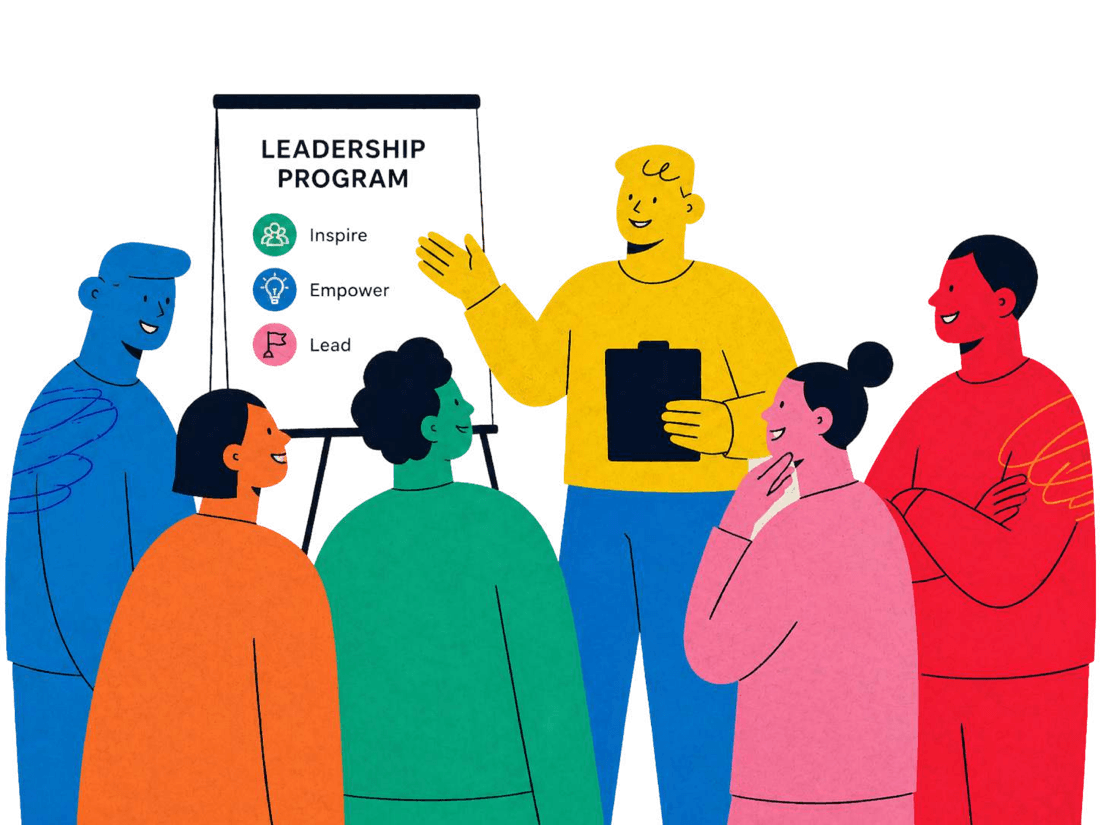
A finding that has circulated widely from workforce research in recent years: a majority of workers say their manager has as much impact on their mental health as their spouse or partner — and more than their doctor or therapist. Whatever the precise number in any given survey, the direction is consistent and the implication is uncomfortable: organisations hand their largest mental-health lever to people trained almost entirely in delivery, not in humans.
The manager controls the inputs the clinical literature cares about: job control, role clarity, feedback quality, workload calibration, and — above all — psychological safety, the shared belief that you can speak up without being punished. Amy Edmondson's research programme and Google's Project Aristotle both landed on psychological safety as the strongest team-level predictor of performance. It is also, mercifully, trainable.
What manager training should actually cover
Most management training teaches process. The training that moves mental-health outcomes teaches three different things. First, recognition: distress at work rarely announces itself; it looks like missed deadlines, withdrawal from banter, camera-off meetings. Managers can learn distress signatures the way first-aiders learn symptoms — that's what Mental Health First Aid certification is. Second, conversations: performance feedback, layoff news, and responses to a personal disclosure are skills with technique, not personality traits. Third, boundaries: a manager is a first responder and a referrer, never a therapist. Knowing where the line is protects both sides.
The compounding effect is real. One trained manager improves the daily experience of eight to twelve people, quarter after quarter. No individual-level benefit — no therapy budget, no app — has that multiplier.
Measure the weather, not just the storms
Manager quality shows up in team-level signal long before it shows up in attrition: mood trends, check-in scores, at-risk flags clustering under one reporting line. Anonymised, aggregated dashboards make that weather visible to leadership while protecting every individual underneath it. The point isn't surveillance of managers — it's knowing where to send support before the storm makes the decision for you.
Aha Health is a whole-person employee wellbeing platform — clinical mental health, physical health, life skills, and financial wellness, with organisational intelligence HR can act on. Book a demo →