Product & research
The science of the 3-second check-in
6 May 2026 · 4 min read · Aha Health team
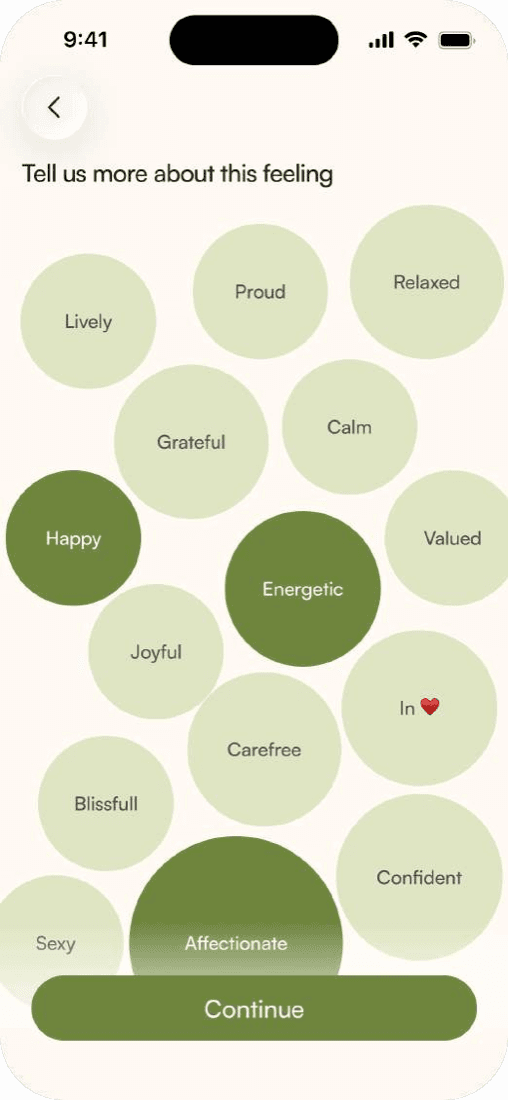
Every measurement of human experience faces a trade-off: the more you ask, the less truthfully people answer. Long instruments fatigue respondents; quarterly surveys force people to average three months of life into a single retrospective guess — and memory doesn't average, it narrates. Psychology's answer to this is ecological momentary assessment (EMA): sample experience briefly, frequently, and in the moment it happens.
EMA research consistently shows that brief in-the-moment reports capture emotional dynamics that retrospective questionnaires structurally miss — the Tuesday dip, the post-deadline rebound, the slow Thursday slide. The cost is that you have to ask often, which means each ask must be nearly free.
Three seconds is a design budget
That's the entire rationale for the home-screen widget: swipe to the feeling, tap for intensity, done. No app open, no login, no five-step form. When the marginal cost of answering approaches zero, honesty and frequency both rise — and a week of tiny signals assembles into a picture no survey can match.
The repayment matters just as much. Data collection that only extracts is surveillance; data collection that returns insight is a relationship. The weekly digest — a narrated, visualised account of your own week — is what the widget earns. It tells the user something true about themselves they didn't consciously know. In our experience that's the moment engagement stops needing to be pushed.
Small signals, early warnings
Aggregated (and only aggregated), these micro-signals become the most responsive layer of organisational intelligence: a department's mood bending downward weeks before utilisation numbers move, appraisal-season stress arriving on schedule, a return-to-office change showing up in the Tuesday data. Asking less, it turns out, is how you end up knowing more.
Aha Health is a whole-person employee wellbeing platform — clinical mental health, physical health, life skills, and financial wellness, with organisational intelligence HR can act on. Book a demo →